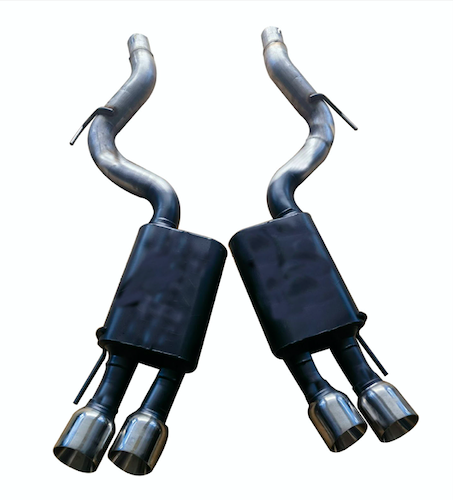
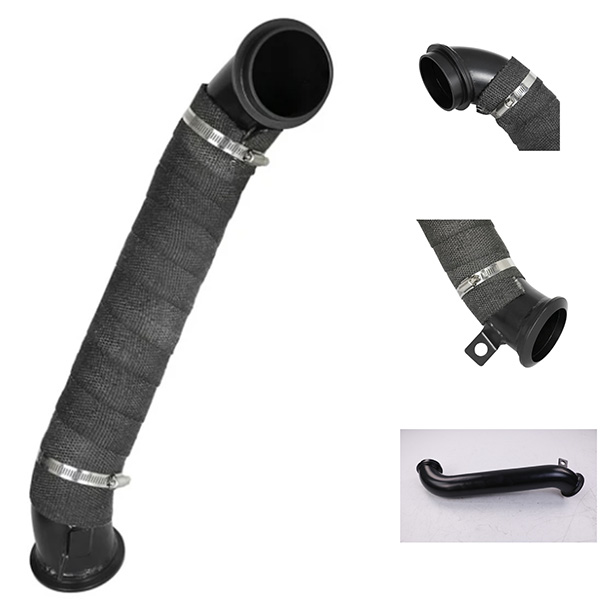
For importers building a private label cat-back exhaust program, the question is rarely whether the supplier can print your logo on a box. The harder questions are: who owns the tooling after you pay for it, what stops the same product from appearing under a competitor’s brand, and how do you structure MOQ across multiple SKUs without locking capital into slow-moving inventory?
This guide addresses the structural risks that most buyers discover too late — after samples are approved and production deposits are paid.
🔩 OEM vs ODM: The Ownership Distinction That Changes Everything
The terms OEM and ODM are used loosely in the exhaust industry, but the legal and commercial implications are very different. Getting this wrong is the most common source of IP disputes in private-label sourcing.
| Cooperation Type | Design Origin | Tooling Ownership | Exclusivity Potential | Best For |
|---|---|---|---|---|
| ODM | Manufacturer’s existing design | Manufacturer retains | Limited — same mold may serve multiple buyers | First-time buyers testing market demand |
| OEM | Buyer-specified design | Buyer owns (if paid and documented) | High — design is buyer-specific | Established brands with repeat volume |
| Modified ODM | Manufacturer base + buyer customization | Shared or negotiated | Partial — depends on what was modified | Buyers needing faster launch with brand differentiation |
The critical distinction: paying for tooling does not automatically transfer tooling ownership. In Chinese manufacturing practice, tooling fees are often treated as a production setup cost — not a transfer of IP — unless the purchase agreement explicitly states otherwise.
A buyer who pays a tooling fee of $800–$2,500 for a custom exhaust tip mold without a written ownership clause may find that the same tip design appears on another brand’s product within 12 months. This is not a hypothetical — it is a documented pattern in the US aftermarket.
⚖️ Tooling Ownership: What the Agreement Must Say
Before paying any tooling fee, buyers should confirm the following in writing — not in a WeChat message, but in the purchase agreement or a separate tooling agreement:
| Clause | What It Should State |
|---|---|
| Tooling ownership | “Tooling paid for by Buyer is the exclusive property of Buyer” |
| Usage restriction | “Manufacturer may not use this tooling for any other customer” |
| Storage and maintenance | Who maintains the tooling and at whose cost |
| Transfer rights | Buyer’s right to move tooling to another manufacturer |
| Tooling lifespan | Expected shot count or production cycle before replacement |
| Replacement cost | Who pays if tooling wears out during the agreement period |
| Return or destruction | What happens to tooling if cooperation ends |
Why transfer rights matter: If a buyer’s private-label program grows and they need to qualify a second supplier for production redundancy, they need the legal right to move the tooling. Without this clause, the original manufacturer controls the buyer’s own design.
For US-based buyers, it is worth noting that tooling ownership agreements with Chinese manufacturers are governed by Chinese contract law unless the agreement specifies otherwise. A clause stating “disputes resolved under [jurisdiction] law” is worth including for high-value tooling programs.
🔐 IP Risk in Private Label Cat-Back Exhaust Programs
IP risk in exhaust sourcing is more specific than most buyers realize. It does not only apply to logos or brand names. The following elements can all be subject to IP disputes:
What can be protected (with proper documentation):
- Custom exhaust tip geometry and finish
- Muffler internal baffle configuration (if buyer-specified)
- Packaging artwork and carton design
- Part number system and SKU structure
- Product photography and technical drawings
- Sound profile specification (if developed through buyer-funded R&D)
What typically cannot be protected:
- Standard pipe diameters and routing paths (these follow vehicle fitment requirements)
- Generic dual-exit configurations
- Common tip shapes (round, oval, slash-cut) without unique geometry
The most common IP failure mode in private-label exhaust programs is not outright copying — it is product drift. A supplier produces your private-label system, then introduces a nearly identical product under their own brand or a house brand at a lower price point. The pipe routing is the same, the muffler body is the same, only the tip finish and carton are slightly different.
Protecting against this requires a market exclusivity clause, not just a tooling ownership clause. These are two different protections:
- Tooling ownership = the manufacturer cannot use your mold for others
- Market exclusivity = the manufacturer cannot sell a functionally identical product in your target market (e.g., US Amazon, specific distributor channels) regardless of whose mold they use
Both clauses are negotiable. Neither is standard. Buyers must request them explicitly.
📐 MOQ Structure: Staging Risk Across a Private Label Program
Private label exhaust programs fail financially when buyers treat MOQ as a per-SKU negotiation rather than a program-level strategy. The right approach is to separate standard components from custom components and stage investment accordingly.
Stage 1: Brand Entry (Lowest Risk)
Use an existing ODM cat-back body with:
- Branded carton (buyer’s artwork)
- Private-label part number sticker
- Custom polished tip finish (minor modification, no dedicated tooling)
- Installation manual with buyer’s brand
Investment: Packaging artwork + minor tip finish change Tooling cost: Minimal or zero MOQ: Negotiate across 2–3 SKUs combined (e.g., F-150 5.3L + Silverado 1500 5.3L)
Stage 2: Brand Differentiation (Medium Investment)
After Stage 1 sell-through is confirmed:
- Commission a custom tip mold (unique geometry)
- Add branded hardware kit with buyer’s logo
- Develop product photography with buyer’s brand identity
Investment: Custom tip tooling ($800–$2,500 typical range) Tooling ownership: Must be documented at this stage MOQ: Higher per SKU, but justified by proven demand
Stage 3: Full OEM Program (High Investment, High Protection)
For established brands with consistent volume:
- Buyer-specified muffler internal design (sound profile)
- Full OEM drawing package
- Market exclusivity agreement by channel
- Pre-shipment inspection protocol
Investment: Full tooling set + engineering development fee Protection: Strongest — buyer owns design, muffler spec, and market rights
📦 Packaging as a Brand Asset — Not Just a Box
In the US aftermarket, packaging is a conversion tool. For Amazon and eBay listings, the carton photography is often the first visual a buyer sees. For performance shop channels, the unboxing experience affects dealer perception of brand quality.
Private-label exhaust packaging should specify:
| Element | Why It Matters |
|---|---|
| Carton material and wall thickness | Protects long pipes during sea freight and warehouse handling |
| Tip protection method | Polished tips scratch easily; foam sleeve or end cap required |
| Pipe separation | Multiple pipes in one carton need foam or cardboard dividers |
| Hardware bagging | Clamps, bolts, and gaskets in a labeled poly bag reduce installation complaints |
| Part number placement | Must be scannable for warehouse receiving and retail listing |
| Installation manual | Reduces customer service load; required for Amazon A+ content |
| Brand consistency | Font, color, and logo placement should match across all SKUs |
One specific risk to flag: if the supplier uses their own generic carton with a buyer’s label sticker applied over it, the carton photography will show the sticker — not a clean brand presentation. For Amazon listings, this creates a perception gap between the product page and the unboxing experience. Buyers should specify full custom carton printing, not label overlay, for any program above Stage 1.
🔍 Supplier Evaluation: What Private Label Actually Requires
Not every cat-back exhaust manufacturer can support a genuine private-label program. The capability gap is real. Buyers should evaluate suppliers against the following criteria before committing to a program:
| Capability | Why It Matters for Private Label |
|---|---|
| In-house mandrel bending | Consistent pipe geometry across production runs |
| Controlled welding process | Repeat quality on muffler inlet/outlet and hanger welds |
| Tip customization capability | Required for Stage 2 differentiation |
| Muffler sound tuning | Required for Stage 3 OEM programs |
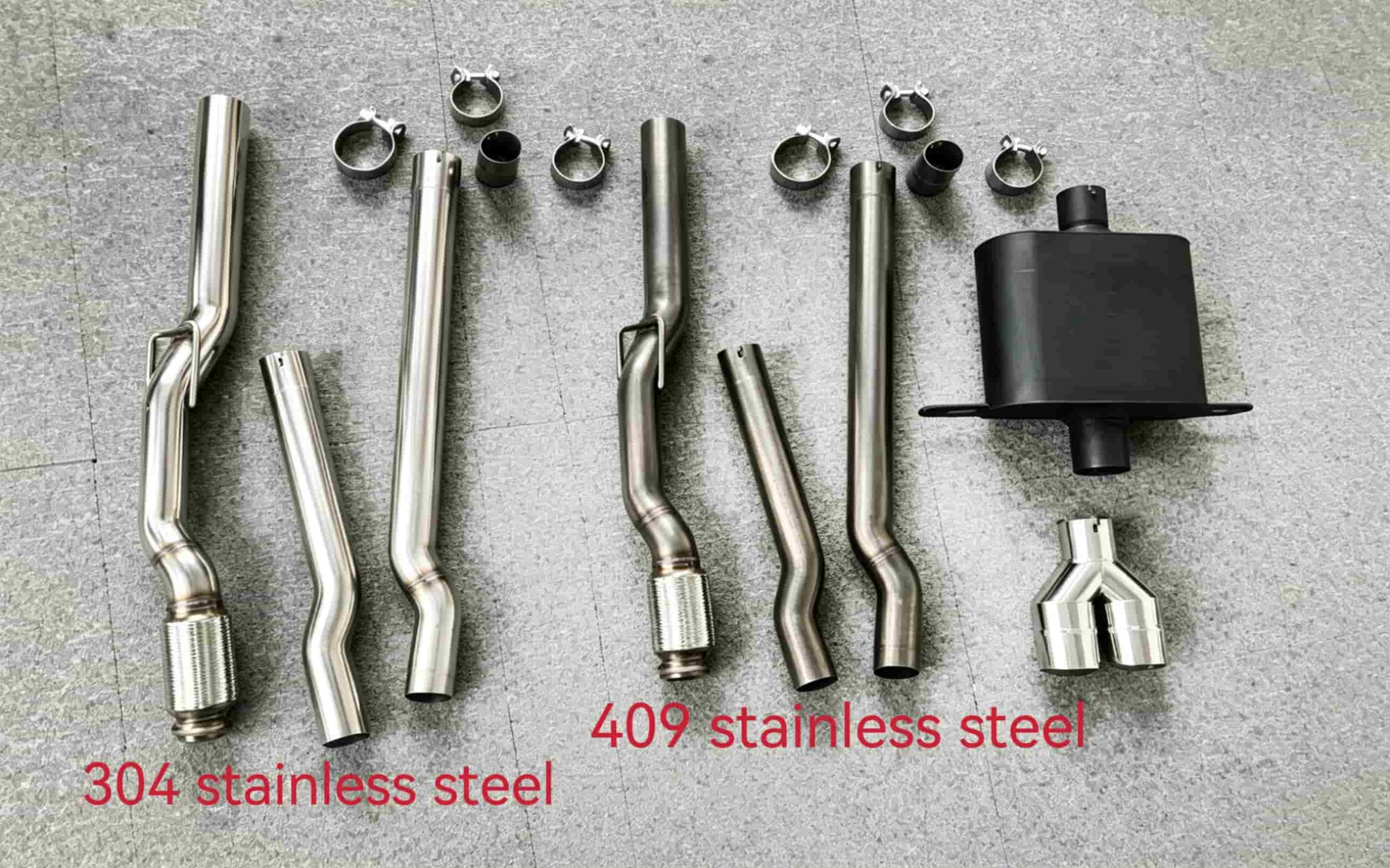
| Material traceability | Confirms 304 vs 409 grade per component — critical for warranty claims |
| Packaging production support | In-house or managed carton printing vs. outsourced |
| Multi-SKU order management | Can handle 5–10 SKUs per order without fitment errors |
| Export documentation | CO, packing list, material certs — required for US customs clearance |
| Pre-shipment inspection support | Allows third-party QC before container loading |
| Repeat production consistency | Sample and bulk must match — not just first order |
The last point is frequently underestimated. A supplier who produces a perfect sample may not have the production controls to replicate it consistently across a 200-unit bulk run. For private-label programs, sample approval is not the finish line — it is the starting point for production control.
For a complete supplier evaluation framework, see our Cat-Back Exhaust RFQ Checklist for US Truck Importers.
💡 When Private Label Makes Sense — and When It Doesn’t
Private label is not the right strategy for every buyer at every stage. The decision should be based on channel clarity, not just margin ambition.
| Buyer Profile | Private Label Fit | Reasoning |
|---|---|---|
| Amazon seller with proven ASIN history | ✅ High | Brand control protects reviews and pricing; differentiation reduces race-to-bottom |
| Regional distributor with dealer network | ✅ High | Dealer recognition builds repeat orders; private label supports MAP enforcement |
| Performance parts brand (existing catalog) | ✅ High | Exhaust extends catalog depth; brand equity transfers to new SKU |
| First-time importer, unproven channel | ⚠️ Medium | Start with Stage 1 only; validate demand before tooling investment |
| Price-only trader (no brand strategy) | ❌ Low | Private label adds cost without strategic benefit; standard wholesale is more efficient |
The clearest signal that private label is premature: the buyer cannot answer “what is my reorder volume in 12 months?” Without a reorder projection, tooling investment and exclusivity agreements have no financial foundation.
FAQ: Private Label Cat-Back Exhaust Sourcing
Q: What is a typical tooling fee for a custom exhaust tip mold? For a standard round or oval tip with custom geometry, tooling fees typically range from $800 to $2,500 depending on complexity and material. Multi-cavity molds for higher-volume programs cost more but reduce per-unit cost over time.
Q: Can I get market exclusivity for a specific vehicle application? Yes, but it must be negotiated explicitly and documented in the purchase agreement. Exclusivity is typically defined by market (e.g., US only), channel (e.g., Amazon US), and time period (e.g., 24 months with minimum order commitment).
Q: What happens to my tooling if I stop ordering? Without a written agreement, the manufacturer typically retains physical possession of the tooling. Buyers should include a clause specifying that tooling will be returned or destroyed — with photographic evidence — within a defined period after cooperation ends.
Q: Is 304 stainless steel required for a private-label program? Not required, but strongly recommended for programs targeting northern US markets or premium positioning. For the material decision framework, see our 304 vs 409 Cat-Back Exhaust Importer Quality Guide.
Q: How many SKUs should a first private-label exhaust program include? Two to three SKUs is the recommended starting point — typically one high-volume F-150 application and one Silverado 1500 application. This provides enough catalog presence to test channel response without overcommitting inventory capital.
Conclusion
A private label cat-back exhaust program is not a branding exercise — it is a supply chain commitment. The buyers who build durable private-label programs are the ones who clarify tooling ownership before paying tooling fees, negotiate market exclusivity before the first bulk order, and stage their MOQ investment against proven demand rather than projected demand.
The risks are manageable. But they require documentation, not assumptions.
At Ningbo U-Ray Auto Technology, we work with importers and private-label brands on OEM/ODM cat-back exhaust programs for the US pickup truck aftermarket — including vehicle-specific development for Ford F-150, Chevy Silverado, and other core platforms — with clear documentation on tooling ownership, material specification, and production consistency.