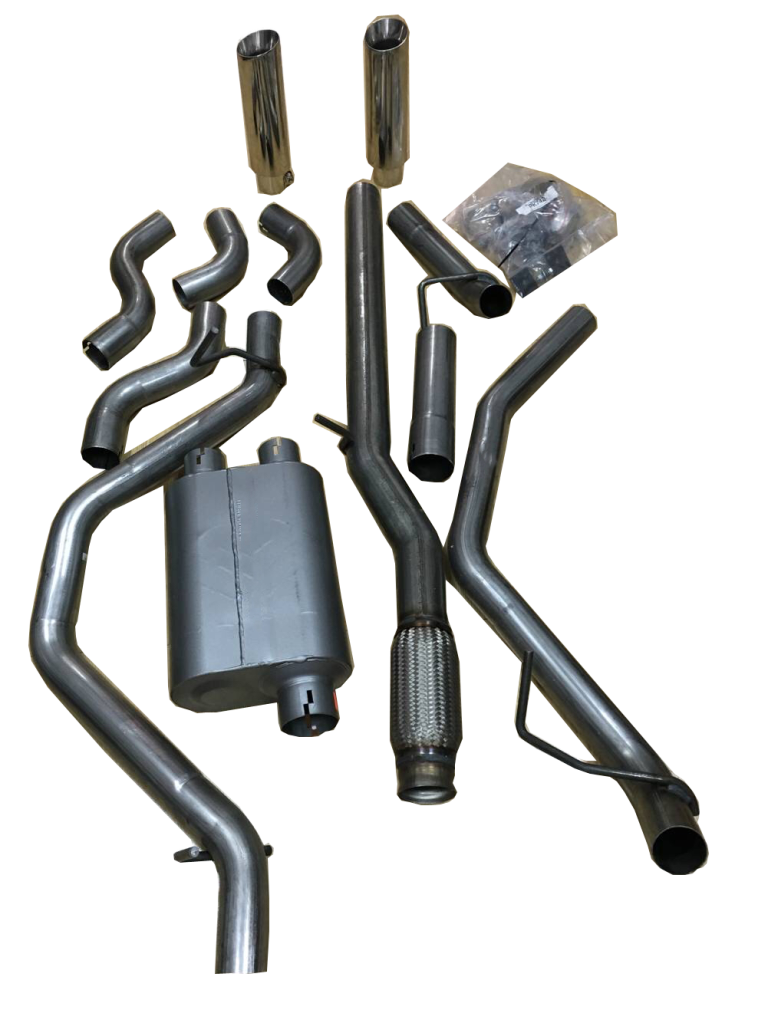
For US truck exhaust importers, a cat-back exhaust RFQ is not just a request for price. It is the first step in controlling fitment accuracy, material consistency, packaging quality, MOQ planning, and long-term supplier reliability.
A vague inquiry such as “Please quote cat-back exhaust for Ford F-150” often leads to inaccurate pricing, wrong applications, delayed samples, and unexpected cost changes before production starts. For B2B buyers, a clear RFQ helps compare suppliers fairly and reduces risk before placing a bulk order.
This checklist is designed for importers, distributors, wholesalers, and private-label brands sourcing cat-back exhaust systems for the US pickup truck aftermarket.
Why a Detailed RFQ Matters for Cat-Back Exhaust Sourcing
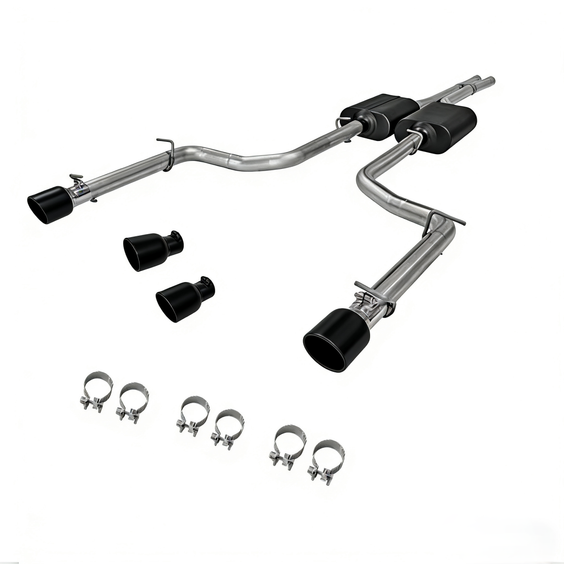
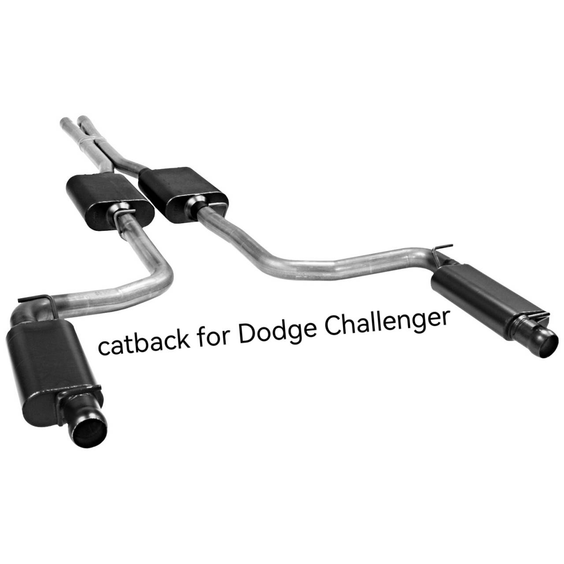
Cat-back exhaust systems are not simple universal parts. They are vehicle-specific products that depend on pipe routing, hanger position, flange angle, muffler layout, tip exit location, and chassis clearance.
For B2B buyers, a poorly prepared RFQ can create several problems:
- Inaccurate quotation
- Wrong sample development
- Misunderstood material requirements
- MOQ disputes
- Packaging cost changes
- Private-label delays
- Fitment-related returns after shipment
A professional RFQ makes the sourcing process more predictable. It also helps the supplier understand whether the buyer needs a standard wholesale product, a private-label project, or a customized OEM/ODM program.
Vehicle Fitment Information Buyers Should Provide
Fitment is the most important part of a cat-back exhaust RFQ. If the product does not fit the target vehicle, low price and good appearance will not protect the buyer from returns and complaints.
Importers should provide the following fitment details:
| RFQ Detail | Why It Matters |
|---|---|
| Vehicle make and model | Defines the basic application |
| Model year range | Prevents generation mismatch |
| Engine type | Affects pipe diameter, sound, and routing |
| Cab configuration | May affect exhaust length and fitment |
| Bed length | Important for pickup truck applications |
| Drivetrain | May affect clearance in some applications |
| Exhaust exit style | Single, dual, side exit, rear exit |
| Target sales market | Helps define material and packaging level |
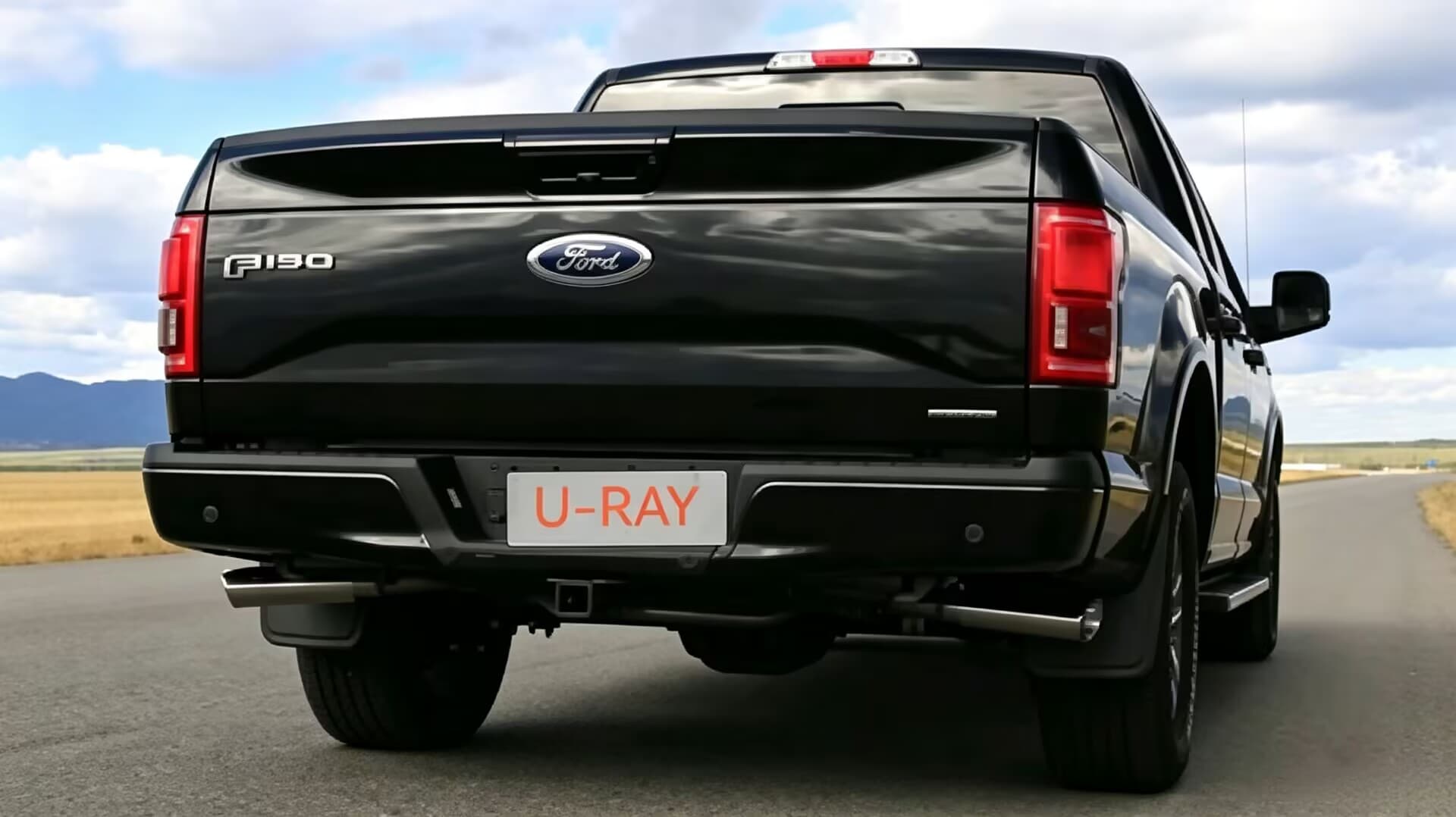
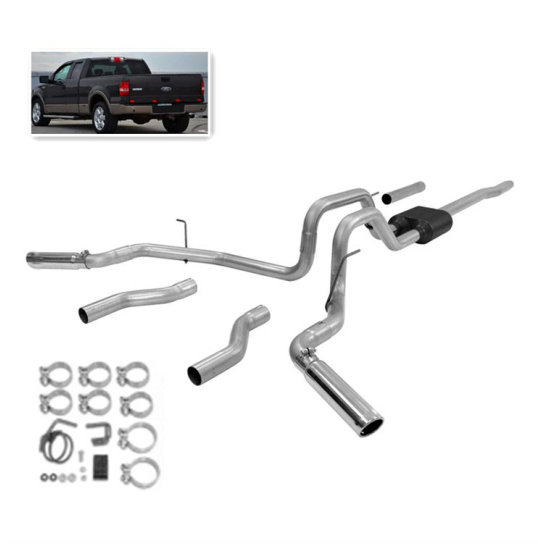
For example, a Ford F-150 RFQ should not only say “F-150 cat-back exhaust.” It should specify model year, engine type, cab style, bed length, and preferred exit style.
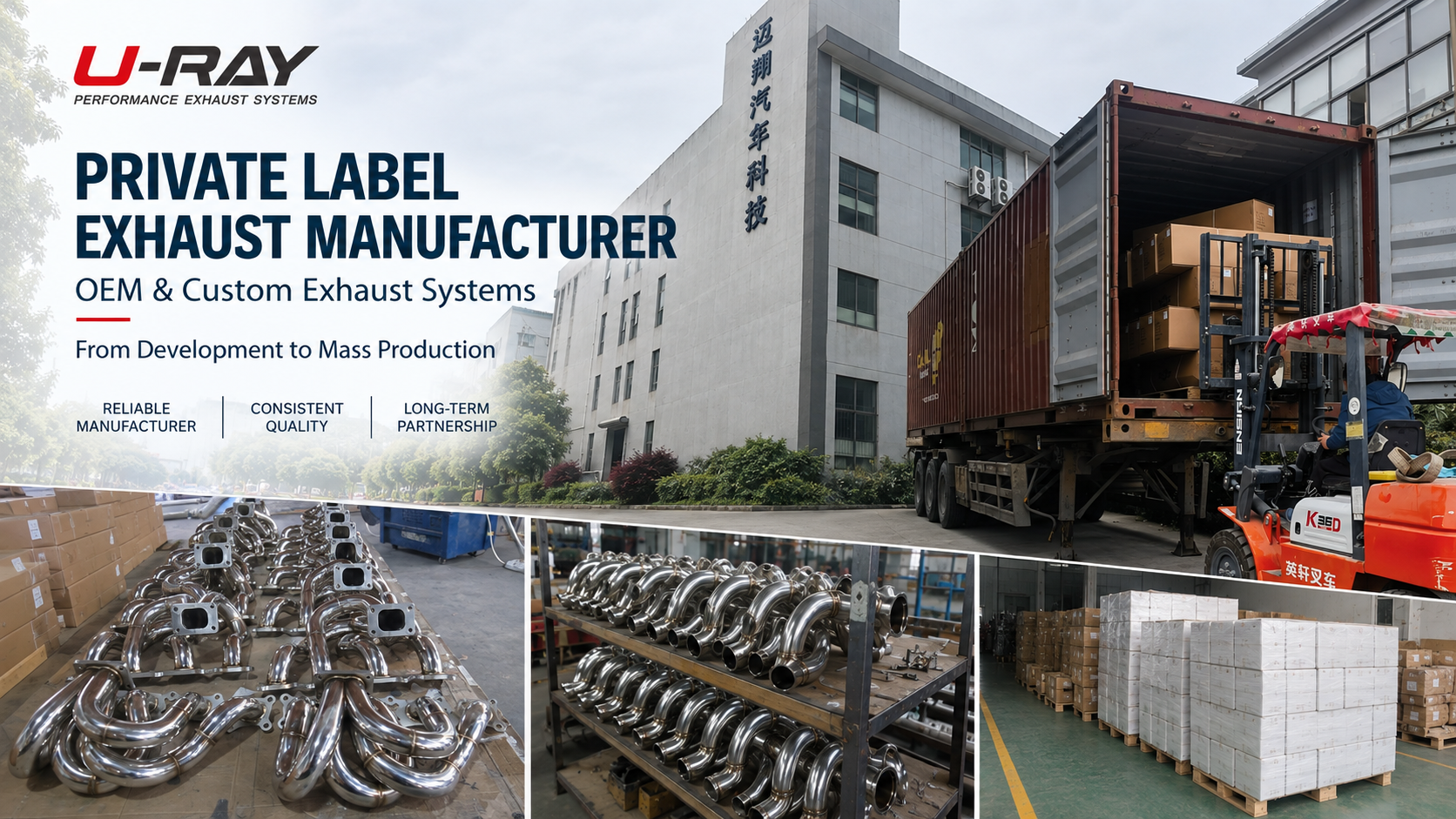
Ningbo U-Ray Auto Technology develops cat-back exhaust systems based on vehicle-specific fitment requirements, helping importers reduce installation complaints and return risks in the US aftermarket.
Material Requirements Should Be Clearly Defined
Many sourcing issues begin with unclear material descriptions. The phrase “stainless steel exhaust” is not precise enough for bulk purchasing.
Buyers should clearly define:
- Main pipe material
- Muffler body material
- Exhaust tip material
- Flange material
- Hanger material
- Pipe wall thickness
- Surface finish
- Welding requirement
A complete material request may look like this:
| Component | Recommended RFQ Detail |
|---|---|
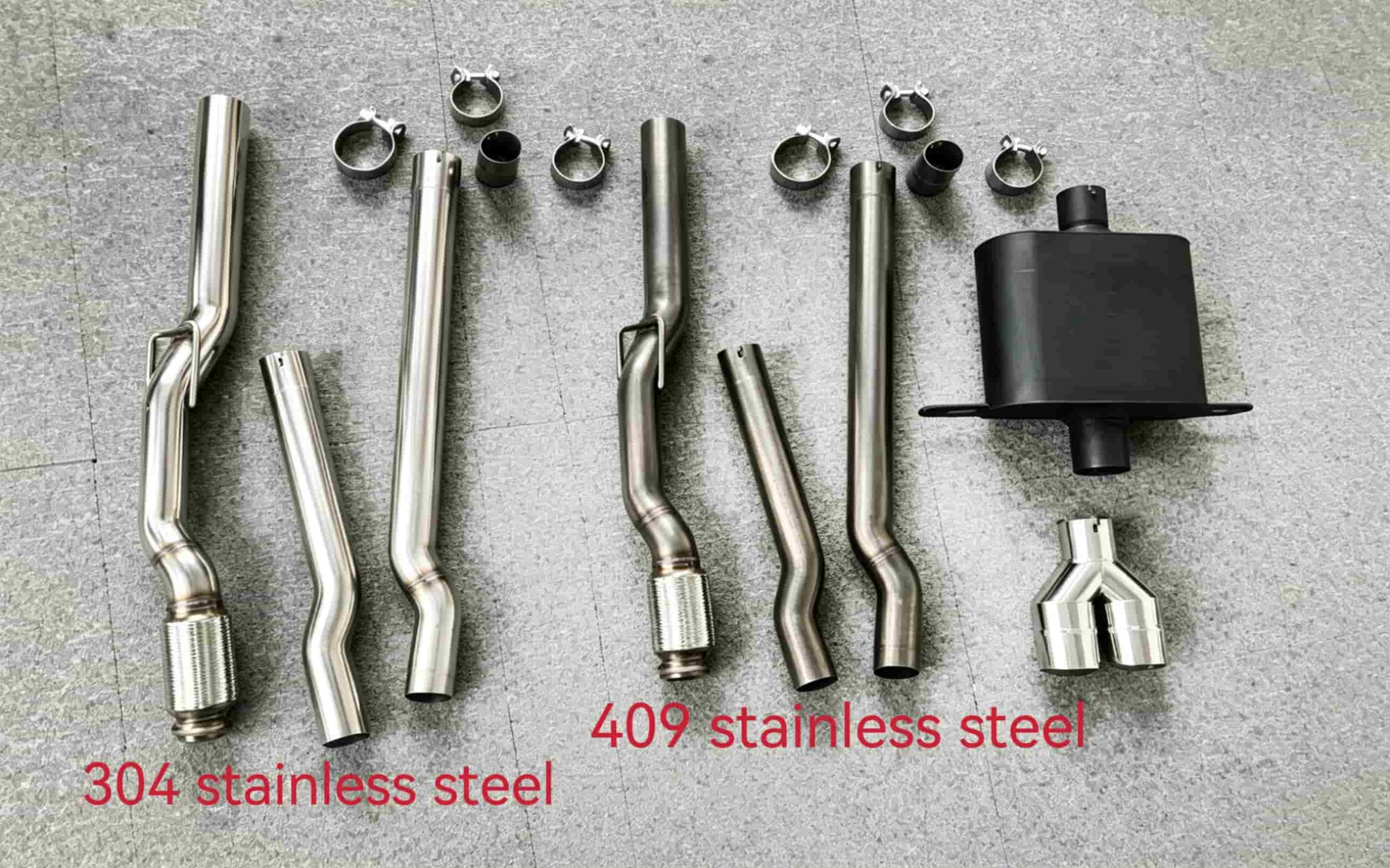
| Main pipe | 304 stainless steel or 409 stainless steel |
| Muffler body | Stainless steel grade and wall thickness |
| Exhaust tip | Polished, brushed, black-coated, or carbon style |
| Flange | Material and thickness |
| Hangers | Material, diameter, and welding requirement |
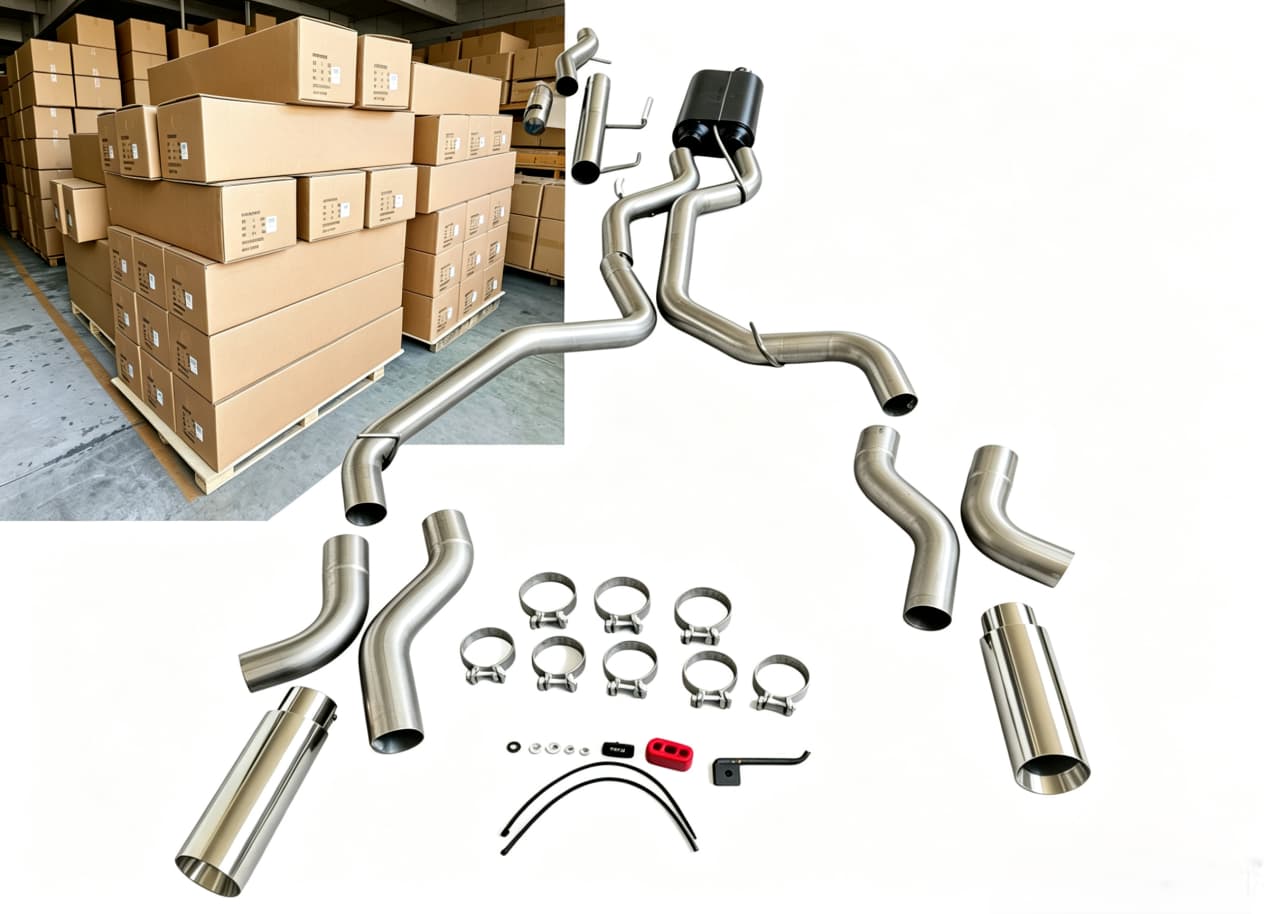
| Hardware | Clamp, bolt, gasket, and mounting kit details |
For premium US pickup truck exhaust applications, 304 stainless steel is often preferred because of stronger corrosion resistance, especially in northern states where road salt is common.
If the buyer is targeting a budget market, 409 stainless steel may be acceptable, but the material grade must be clearly stated in the product listing and purchase agreement.
MOQ Should Be Planned by SKU Strategy
For pickup truck exhaust programs, MOQ should not be discussed only one SKU at a time. Most importers need a group of related SKUs to build a competitive catalog.
A typical US truck exhaust catalog may include:
- Ford F-150 cat-back exhaust
- Chevy Silverado 1500 cat-back exhaust
- Chevy Silverado 2500HD exhaust
- RAM 1500 cat-back exhaust
- Toyota Tundra cat-back exhaust
- Toyota Tacoma cat-back exhaust
- Jeep Wrangler exhaust systems
If each SKU requires a high MOQ, the buyer may face overstock before market demand is proven. A more practical approach is to discuss total order quantity across multiple applications.
U-Ray supports B2B buyers with OEM/ODM cooperation and multi-SKU sourcing discussions, helping wholesalers build pickup truck exhaust programs without overcommitting to one single model.
Private Label Requirements Must Be Included Early
For Amazon sellers, regional distributors, and private-label brands, product branding is not limited to a logo on the carton. Private label sourcing requires complete product presentation.
Buyers should include these details in the RFQ:
- Brand name
- Logo placement
- Carton artwork
- Product label
- Part number system
- Barcode or SKU label
- Installation manual
- Warranty card
- Neutral packaging or branded packaging
- Custom exhaust tip finish
- Required product photos or packaging photos
If these requirements are discussed after sample approval, the buyer may face artwork delays, additional packaging cost, or inconsistent shipment presentation.
A professional cat-back exhaust manufacturer should understand that packaging, labeling, and documentation are part of the product, not afterthoughts.
Packaging Should Be Treated as a Cost-Control Item
Cat-back exhaust systems are bulky, long, and easily damaged during sea freight and warehouse handling. Polished tips, flanges, mufflers, and pipe sections all need protection.
Buyers should ask the supplier to confirm:
- Carton dimensions
- Gross weight and net weight
- Inner protection method
- Exhaust tip protection
- Flange edge protection
- Hardware packing method
- Pallet loading plan
- Container loading quantity
- Packing photos before shipment
Poor packaging can turn a profitable SKU into a loss. Even if the exhaust system is manufactured correctly, scratched tips, dented mufflers, or missing hardware may cause returns and negative reviews.
Sample Approval Must Match Mass Production
A sample is useful only if the factory can repeat the same quality in bulk production. Importers should ask how the supplier controls consistency from sample to mass production.
Important checkpoints include:
| Checkpoint | What Buyers Should Confirm |
|---|---|
| Pipe diameter | Matches approved specification |
| Bending angle | Consistent with approved sample |
| Hanger position | Fits factory mounting points |
| Muffler location | No clearance issue |
| Tip alignment | Matches bumper and exit design |
| Welding quality | Consistent appearance and strength |
| Surface finish | Same as approved sample |
| Packaging method | Same protection level as confirmed |
Before confirming production, buyers should define which sample features are locked as production standards.
Ningbo U-Ray Auto Technology focuses on controlled manufacturing processes for cat-back and axle-back exhaust systems, supporting B2B buyers who require stable repeat orders rather than one-time sample success.
Final RFQ Checklist for Importers
Before sending a cat-back exhaust RFQ, importers should include the following details:
| RFQ Item | Purpose |
|---|---|
| Vehicle application | Prevents wrong fitment |
| Model year range | Avoids generation mismatch |
| Engine type | Supports correct pipe and sound design |
| Material grade | Controls cost and corrosion resistance |
| Pipe diameter | Affects flow, tone, and compatibility |
| Exhaust tip style | Impacts product positioning |
| MOQ expectation | Helps supplier plan production |
| Private label request | Supports brand consistency |
| Packaging requirement | Reduces freight damage |
| Sales channel | Helps define product and packaging level |
| Required documents | Supports customs, QC, and retail review |
A complete RFQ saves time for both buyer and manufacturer. More importantly, it allows importers to compare quotations based on the same specification instead of chasing the lowest price without understanding what is included.
Conclusion
For US truck exhaust importers, the quality of the RFQ often determines the quality of the sourcing result. A detailed cat-back exhaust RFQ helps prevent fitment errors, material disputes, packaging damage, private-label delays, and production inconsistency.
U-Ray supports wholesale buyers with vehicle-specific cat-back exhaust development, OEM/ODM cooperation, private-label packaging, and multi-SKU sourcing for major US pickup truck platforms.